
Our Science
APPROACH
Linking EEG to clinical outcome
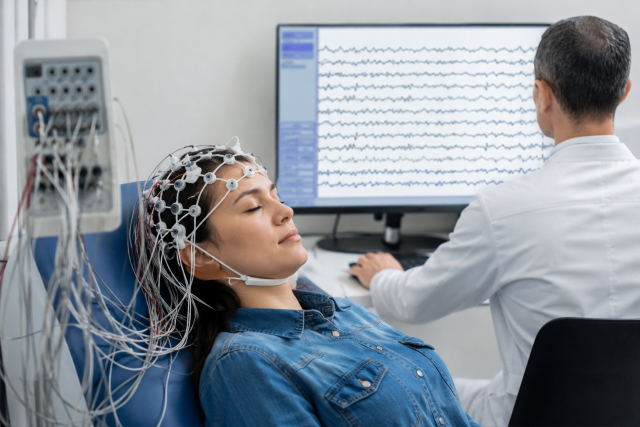
Electroencephalography (EEG) captures electrical activity in cerebral cortex in real time. Electrodes placed across the scalp detect tiny changes in electrical activity, creating a record of brain activity that can reveal patterns across different regions.
Rather than waiting until after treatment to measure change, we look for signals that are already present before treatment begins. By linking these baseline patterns to clinical outcomes, we can use AI to identify EEG signatures associated with treatment response.
We first establish a baseline picture of each patient’s brain activity
Before treatment, patients undergo an EEG recording under standardized conditions.
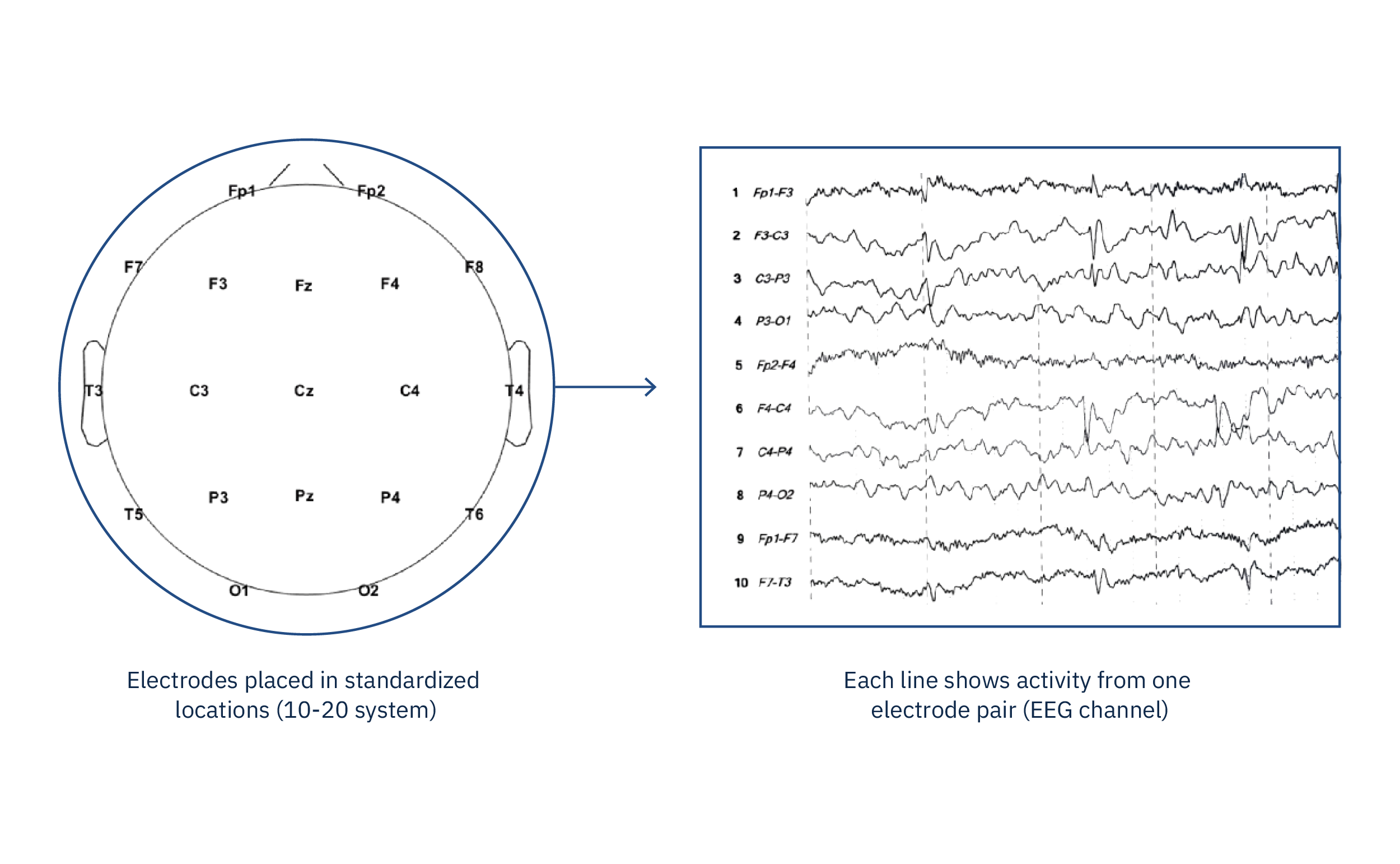
Electrodes positioned across the scalp capture activity from multiple regions, creating a detailed map for each patient.
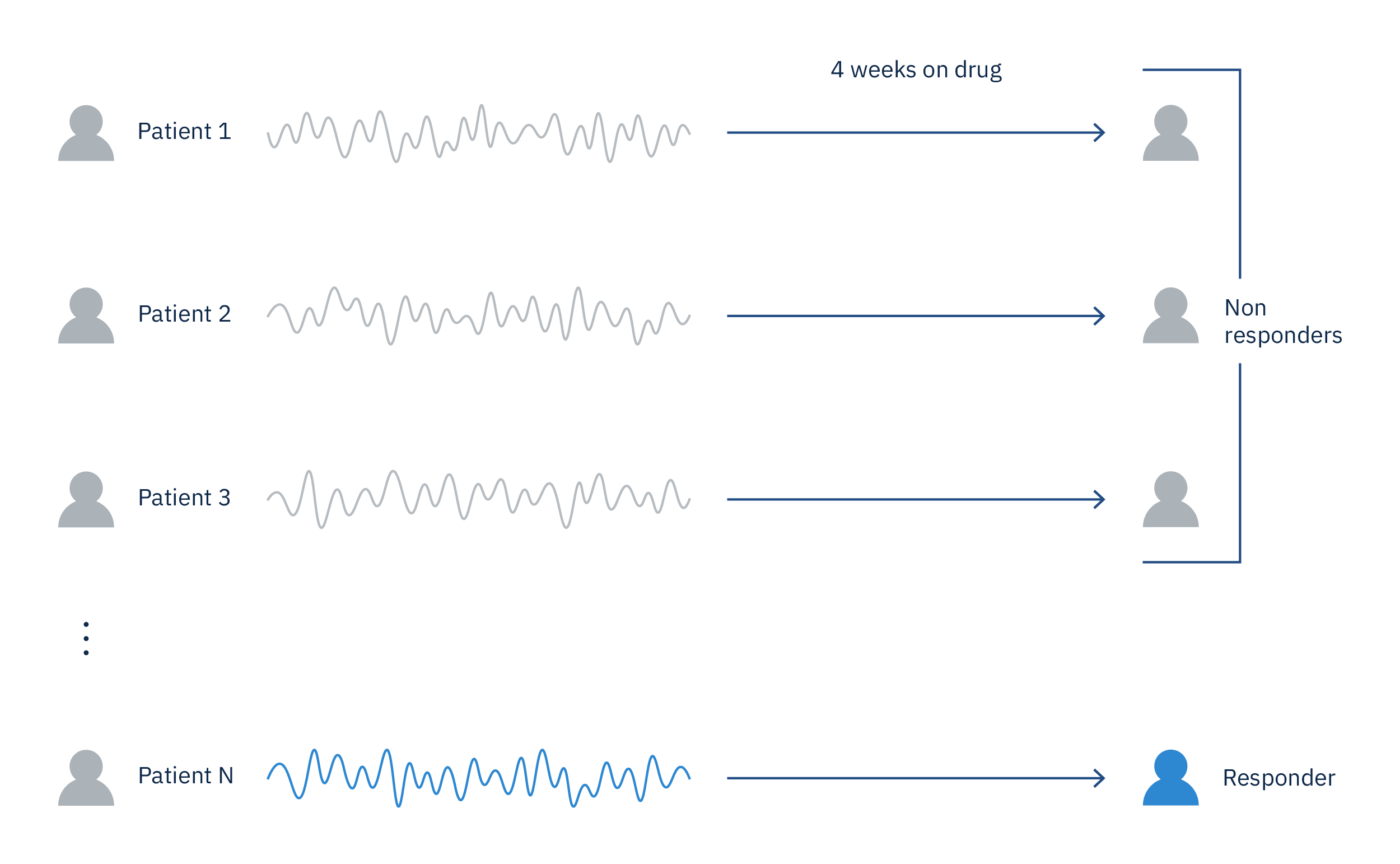
After receiving treatment, baseline EEGs are linked to response
Patients are assessed using clinical measures of symptoms and cognitive function.
Their outcomes are linked back to their baseline EEG, allowing us to compare brain activity between responders and non-responders using AI.
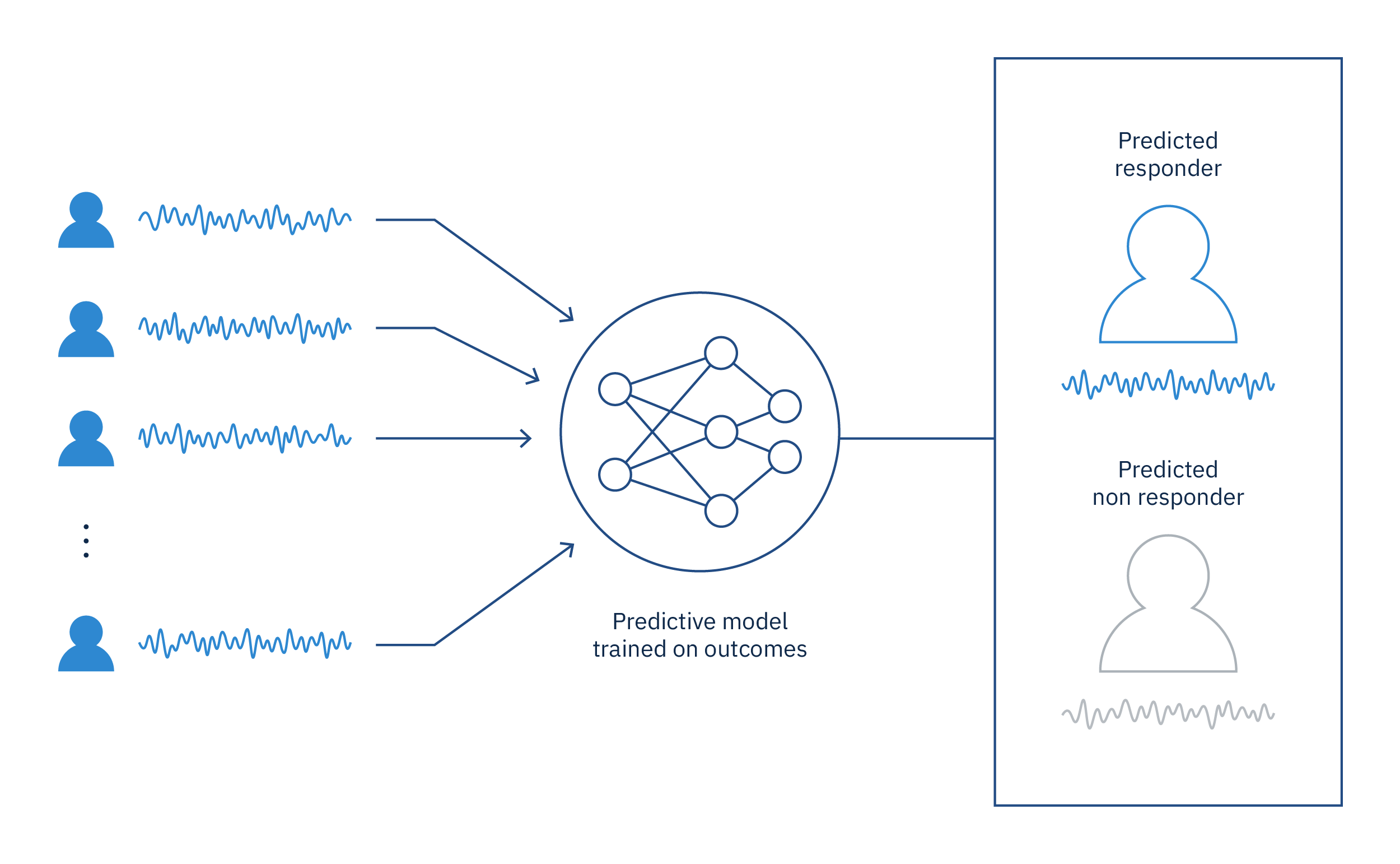
AI searches the data for patterns associated with response
With baseline EEGs from patients with known outcomes, AI can analyze large amounts of complex, multi-channel data to identify the unique EEG signature associated with response, distinguishing responders from non-responders.
The model is then able to predict potential future treatment responders using their baseline EEG.
>90%
accuracy identifying responders in two Phase-2 clinical trials
20%
patients showed >40% reduction in cognitive impairment and >30% reduction in negative and positive symptoms
CLINICAL EVIDENCE
Identifying treatment responders
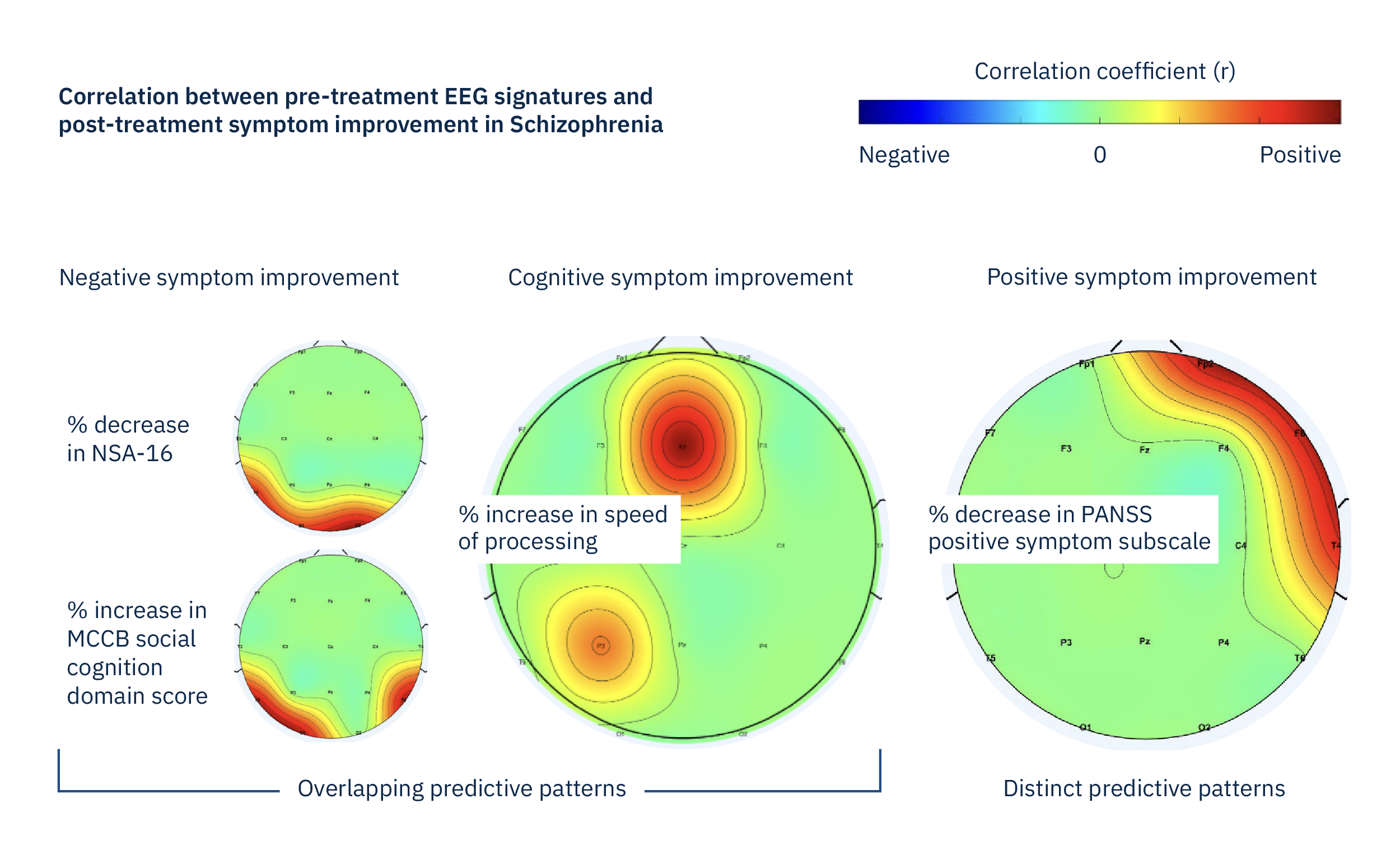
Our methodology was tested on a drug for schizophrenia developed by Eli Lilly, pomaglumated. When mapping correlation between predictive EEG signatures and treatment response, we observed negative and cognitive symptoms showed overlapping predictive patterns, while positive symptoms showed a distinct pattern; patterns consistent with clinical evidence that demonstrate our technology’s power to identify subgroup and symptom selective responses.
OUR IMPACT
A more targeted approach to drug development
Identifying treatment-responsive subgroups could help reduce trial size and cost while creating new opportunities for promising therapies.
Reduce size and cost of trials
By enriching them with patients likely to respond, our technology can substantially reduce Phase-3 trial size, cost, and risk.
Prescreen patients
Our technology can be used to prescreen patients with schizophrenia and match them with promising treatments.
New life for promising therapies
We can acquire psychotropic medications that failed in Phase-3 and use our approach to identify responders.
Improving patient treatment
As unique patterns for psychotropic drug response have accumulated, the method can then be used prospectively to select the best medication for individual patients.